Do You Need a Permit for a Retaining Wall in Baton Rouge?
If you are planning a retaining wall on your property, one of the first questions you will face is whether the city requires a permit. In Baton Rouge, the answer depends primarily on the wall's height, its location on the lot, and the type of material being used. Most residential retaining walls that stay under a certain height can be built without a permit, but once you cross that threshold, the rules change quickly. Understanding these local requirements before you dig is the best way to avoid fines, forced removal, or problems when you sell your home.
The general rule of thumb in East Baton Rouge Parish is that a retaining wall four feet or shorter, measured from the bottom of the footing to the top of the wall, typically does not require a building permit. Walls taller than four feet usually do, and they often need engineered plans stamped by a licensed professional. There are also exceptions for walls that hold back surcharge loads, such as a driveway or a structure above them, and for walls built near property lines or drainage easements. Because these details matter, it is always wise to confirm with the parish before construction begins.
The 4-Foot Retaining Wall Permit Rule Explained
When homeowners search for information about a 4 foot retaining wall permit, they are usually trying to figure out whether their project falls under the radar of local code enforcement. The four-foot mark is a common threshold across many U.S. jurisdictions, and Baton Rouge generally follows a similar approach. A wall that is four feet or less in exposed height and not supporting a structure above it is often considered a minor accessory structure, which means you may be able to proceed without a formal permit. However, that does not mean the wall is exempt from all rules. Grading, drainage, and setback ordinances still apply, and a wall that redirects water onto a neighbor's property can create legal problems even if it was built without a permit.
It is also important to understand how height is measured. Some inspectors measure from the finished grade on the downhill side, while others measure the total wall height including the portion buried below grade. A wall that looks like three feet above the soil line could actually be five feet tall once the footing and buried courses are counted. If your project is close to the four-foot line, it is worth having a professional evaluate it. A local contractor who installs walls every day can tell you how the parish is likely to interpret your specific plan and whether a permit application is the safer path.
Retaining Wall Height Limits and When Engineering Is Required
The retaining wall height limit for permit-free construction is not the only number that matters. Once a wall exceeds four feet, the parish typically requires a permit and may require structural engineering. Walls taller than six feet often trigger additional review, and walls that support driveways, pools, or building foundations are held to stricter standards regardless of height. Engineered designs account for soil pressure, water drainage, and the weight of anything sitting above the wall, which is why a licensed engineer's stamp is often part of the permit package for larger projects.
Height limits also interact with setback rules. A tall wall built too close to a property line can be subject to additional restrictions, and in some cases, a variance may be needed. If you are planning a wall that will change the grade of your yard significantly, or if the wall will sit near a flood zone or drainage channel, expect closer scrutiny. Concrete Retaining Walls are a popular choice in this region because they handle heavy loads and saturated soil well, but even concrete walls must meet the same height and permitting rules as any other material. A professional assessment can save you from building a wall that has to be torn out later.
Why Local Rules Matter for Baton Rouge Homeowners
Baton Rouge sits in a region with heavy rainfall, expansive clay soils, and a high water table in many neighborhoods. Those conditions make retaining wall design more demanding than in drier parts of the country. A wall that would perform fine in Arizona may fail here after a few wet seasons if it lacks proper drainage or a sufficiently deep footing. Local permitting rules exist partly to protect homeowners from those failures, and inspectors often look closely at drainage details, footing depth, and material specifications when a permit is required.
Neighborhoods in Zachary, Central, and Baker may have their own overlay requirements or HOA rules on top of parish code, so it is worth checking at every level. Even when a permit is not legally required, following best practices for drainage and compaction protects your investment. If you are unsure where your project stands, a quick conversation with a local installer can clarify the path forward and help you decide whether to pull a permit voluntarily.
Retaining Wall Installation Near Me: When to Call a Pro
Some homeowners are comfortable building a low garden wall themselves, and for a wall under two feet that is not holding back a slope, that can be a reasonable weekend project. But once you are dealing with a 4 foot retaining wall permit question, a slope that affects your foundation, or a wall that will hold back saturated soil, the stakes rise fast. A failed retaining wall can damage your home, flood a neighbor's yard, or create a liability issue that insurance may not cover. Professional Retaining Wall Installation includes proper excavation, base preparation, drainage, and compaction, all of which are hard to get right without experience.
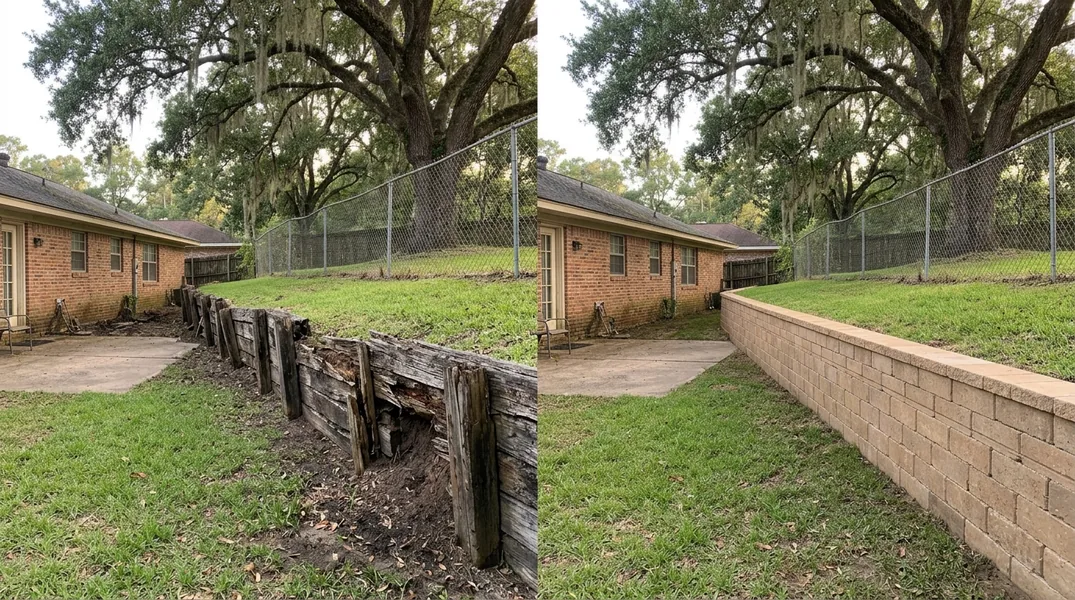
If your existing wall is leaning, cracking, or showing signs of bulging, Retaining Wall Repair may be more urgent than a new build. In some cases, a wall that has failed beyond repair needs Retaining Wall Replacement, and that project will likely require a permit if the new wall exceeds four feet. A professional can assess the cause of the failure, recommend the right fix, and handle the permitting and inspection process so you are not navigating it alone. For homeowners who want a clear picture of what the project will involve, a free estimate is the easiest first step.
Retaining Wall Cost in Baton Rouge: What to Budget
Homeowners often ask about pricing before they ask about permits, and the two are connected. A permitted wall with engineered plans will cost more upfront than an unpermitted low garden wall, but it also protects you from expensive problems later. In the Baton Rouge area, retaining wall costs vary based on height, length, material, site access, and soil conditions. A short decorative wall might be a modest project, while a tall structural wall with drainage and engineering can run into five figures. Getting a written estimate that separates materials, labor, permitting, and engineering helps you compare bids fairly.
Budgeting for a retaining wall also means planning for drainage. French drains, weep holes, and gravel backfill are not optional extras in this climate; they are essential to the wall's lifespan. Skipping them to save money now often leads to repair costs later. If you are comparing quotes, ask each contractor how they handle water management and whether permit fees are included. For a straightforward conversation about your project and a realistic number, call Baton Rouge Retaining Wall at (225) 416-8270 or request a free estimate online.
Looking for a professional retaining wall contractor in Baton Rouge? Baton Rouge Retaining Wall responds fast for all your retaining wall needs.
Get a Free QuoteOur services: Retaining Wall Installation · Retaining Wall Repair · Retaining Wall Replacement